Most families won't lose help because they stopped qualifying. They'll lose it to paperwork.
What's reported as of October 6, 2026, with a focus on services for people with disabilities.
Kansas, October 1: take the help now, or keep your place in line?
You've waited years on a list for the services your child will need for life. Then the state offers you a deal. Kansas just opened a new program, the Community Supports Waiver. It offers personal care, respite, therapies, job support, equipment, and transportation. You could start getting it now.
But it's capped at $20,000 a year per person, and only 500 people can enroll in the first year. And if you're on the waiting list for the comprehensive waiver, enrolling means giving up your place on that list. Kansas's own page says so. That list was reported at 5,348 people in August. I could find no promise that you can get your old place back.
If $20,000 covers what your child needs, it's a gift. If your child needs more, you can pass it fast, and you've already let go of your spot. The state has arranged it so the parent has to decide.
Sources: Kansas Department for Aging and Disability Services; SpecialNeeds.com; Kansas Reflector, August 24, 2026.
Here's the rule underneath. Under federal Medicaid rules, institutional care is mandatory. The help that lets your child live at home (the aide, the respite, the in-home support) is optional. When money gets tight, the optional help is what stretches first.
And the way people lose it is rarely a dramatic event. It's a form.
The paperwork problem, state by state
- Arizona: SNAP caseload fell by roughly half this spring, from about 910,000 people to about 470,000. Reporting found many who lost it were still eligible and got tangled in paperwork they couldn't untangle. (The New York Times)
- Missouri: More than 333,000 people lost Medicaid between January 2025 and February 2026, and 91.9 percent of those were procedural terminations for missing or incomplete paperwork, not a finding of ineligibility. The call center was reported at an average wait of 57 minutes, with more than half of callers disconnected or giving up. (KCUR; Missouri Department of Social Services)
- Massachusetts: The share of SNAP applicants who called and could not reach a worker rose from 61 percent to nearly 81 percent. (ProPublica, June 2026)
- Utah, Oklahoma, Idaho, and Missouri: Reported to have used notice response windows as short as 10 days instead of 30. With mail time, that can leave a family fewer than five business days.
- Six states (Arkansas, Idaho, Indiana, New Hampshire, North Carolina, Ohio) will require documentation of medical frailty for the Medicaid work rule from the start, and Indiana plans a three-month lookback. (AP, September 26, 2026; Indiana FSSA)
- Nationally: About 27 million people lost Medicaid after the pandemic, and roughly 70 percent of those terminations were procedural: the state couldn't verify, not "found ineligible."
Short deadlines. Confusing forms. The same information asked for twice. Phones nobody answers. These families didn't stop qualifying. The paper failed. Keeping what your child has is the first job of this book: the paperwork, proving what your child needs, what to do when someone says no.
The other lesson: nothing is guaranteed.
Programs get capped, delayed, cut, and put behind new paperwork. So every parent has to be able to answer one question: what if it goes away?
That's why a significant part of this book is built around it. For housing, work and daily purpose, health care, food, the people who help, getting around, and the monthly check, it asks the same things: what would it cost to replace, what's free, who pays, and what's the backup. It shares what other families are doing. And it ends with how to keep the plan alive and hand it to whoever comes after you.
More from around the country: New York, Maryland, Indiana, school vouchers, early-start states, national enrollment
New York
This isn't only happening in red states. As of October 1, New York cut its Medicaid rate for one-on-one autism therapy (ABA delivered by a technician) to $9.63 per 15 minutes, reported as the third cut in a year and half of what the state paid before October 2025. Providers warn many may stop taking Medicaid. A service can still be "covered" and be impossible to find.
Sources: New York State Department of Health, Medicaid Update, August 2026; Acuity News, September 28, 2026.
Maryland
Maryland cut $126 million in state funds from its developmental disabilities budget. Rules reported in May would limit how much a parent can be paid to care for an adult child at home: no more than 40 hours a week, with the family hourly rate falling from $32.45 to $24.14. In July the state delayed the wage cuts with no firm new date. If you're a parent who is also the paid caregiver, this is the one to watch.
Sources: Maryland Matters, May 26 and July 2, 2026.
Indiana
Indiana started using a new assessment tool in January to decide who qualifies for its disability waivers. Denials for two of those waivers rose from under 1 percent to about 6 percent. Families have 33 days to appeal, and services continue during an appeal. Lawmakers are asking the state to pause denials and order an independent audit.
Source: Indiana Capital Chronicle, August 13, 2026.
School vouchers
"School choice" vouchers are being marketed to parents of children with disabilities. ProPublica found that in Louisiana's new program, only 14 of about 350 private schools reported enrolling any child with a disability. In Florida, more than half of private schools say they don't serve students with disabilities. A voucher isn't a school seat.
Source: ProPublica, September 11, 2026.
Nebraska, Montana, Arkansas
These states didn't wait for the federal deadline. Nebraska started Medicaid work checks on May 1. Montana's checks are underway, with an October 1 compliance deadline, and advocates say many people found the notices confusing. Arkansas began a "soft launch" July 1, with penalties starting January 1, 2027.
Sources: Nebraska Public Media, April 30, 2026; KFF Health News / NPR, September 29, 2026; Arkansas Department of Human Services; KUAF, July 16, 2026.
Everywhere else
Federal data released September 25 shows Medicaid and CHIP enrollment down in 49 states and Washington, D.C. over the past year, more than 5 million people, about 6 percent, before the new rules even take effect.
Source: KFF Medicaid enrollment tracker, data released September 25, 2026.
Ready now? Get When the Safety Net Breaks for $14.99.
Get my copy, $14.99
14-day money-back guarantee. Or keep reading to see what's inside.
When the Safety Net Breaks
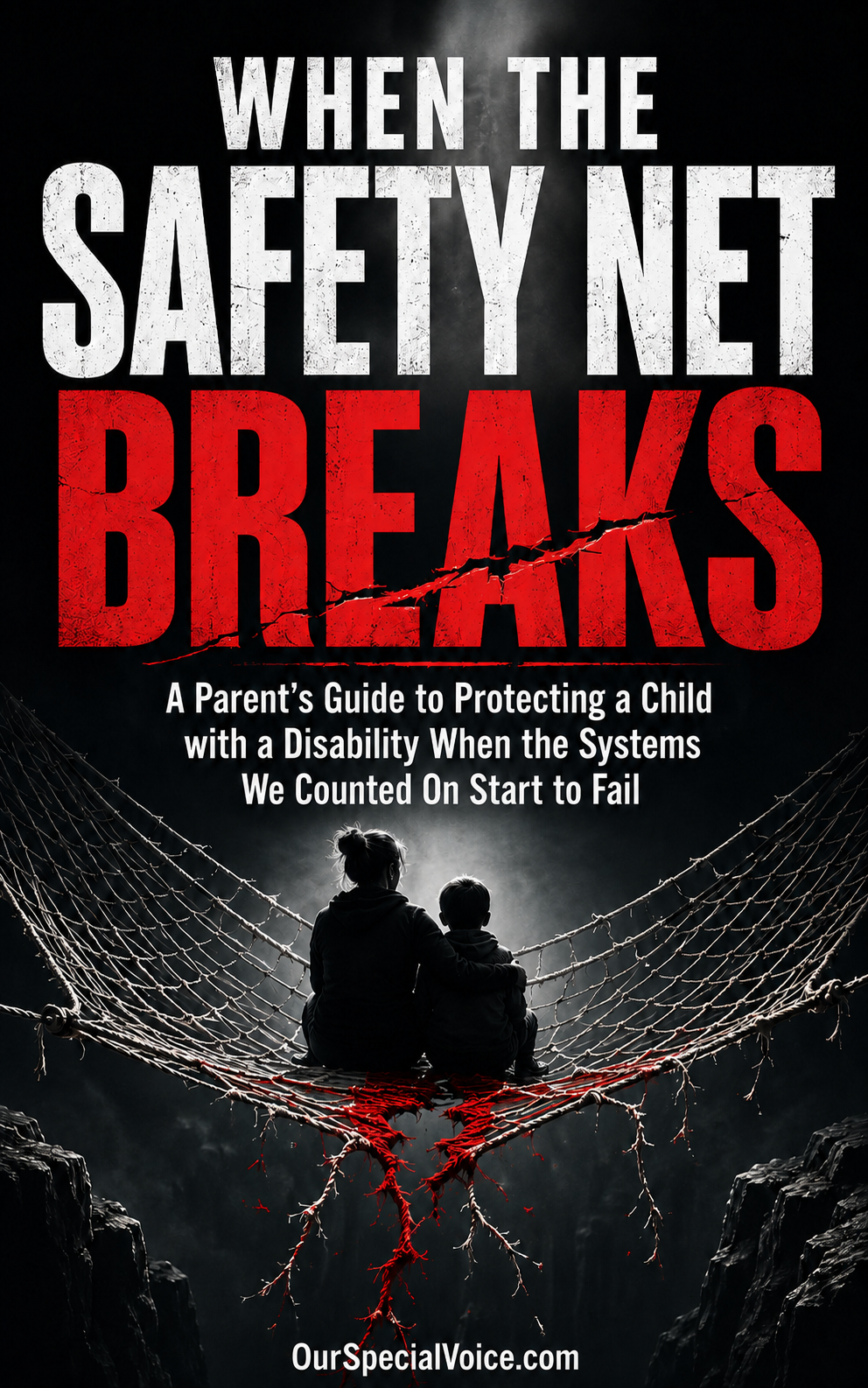
A parent's guide to protecting a child with a disability when the systems we counted on start to fail.
Most special needs planning books were written for a world where the help would always be there. This one is built for a world where it may not be. It has one job, in two halves: first, keep what your child has, because I believe most of the damage in the next few years will come from paperwork, deadlines, and rules, not dramatic events. Second, build a plan for the day parts of it go away.
It answers what I never saw another book ask in depth: what do you do if the support you planned around goes away?
Get my copy, $14.99
A look at what's inside
Four parts, 21 chapters. Each chapter opens with a family like yours and ends with What to Do This Month: one short list, and one tool you can fill in and keep. A pencil and a folder are enough. You don't have to read it in order.
Part One: Where You Stand
-
Chapter 1
The Ground Moved
Margaret did everything right. She had the trust, the lawyer, the binder. Then one letter gave her ten days, and a phone line that disconnected after an hour and forty minutes.
-
Chapters 2 and 3
What You Actually Have, and Your Exposure Map
Make your Benefit List: every support your child receives, and which kind of money pays for it. Then score which items are in danger, and how soon. You'll have both on paper before Part Two.
Part Two: Hold the Line
-
Chapters 4 and 5
The Paperwork Is the Program, and Proving It
A contact log, a renewal tracker, a notice-response template. Then how to prove what your child needs when a diagnosis alone isn't enough: a day log, a provider letter, and how to meet a computer that says no.
-
Chapter 6
The Work Rule
Jordan works from his bedroom, and the platform logs tasks, not hours. His mother learned there are two doors: prove the hours, or prove the exemption. Neither can be built on the day the letter comes.
-
Chapters 7 and 8
When They Say No, and Being Watched
Most denials aren't final, but the clock starts the day the notice arrives. How to appeal, what goes in the packet, and how to stay out of trouble with asset limits, overpayments, and the rent-and-groceries rule.
Part Three: If It Goes
-
Chapter 9
The Four Walls
The money, the legal authority, the people, and the paper. Aisha turned eighteen, and in the eyes of the law her own mother became a stranger to her doctors.
-
Chapters 10 to 13
A Roof, Food, Care, and The Hands That Help
For each support, the same five steps: name its job, price the replacement, find the free layers, decide who pays the rest, and name the backup. Gloria's son was approved for 30 hours of help a week. Nobody came.
-
Chapters 14 to 16
Days With Purpose, Getting There, and The Check Itself
What happens at the cliff when school ends. How a ride disappears with a county budget. And what to do if the monthly check changes.
-
Chapters 17 and 18
A Life, Not Just a Plan, and The Last Part of Their Life
Who will visit your child just because they want to. And the subject most planning books keep closed: who decides, and what they decide, at the end.
Part Four: Keep It Alive
-
Chapters 19, 20 and 21
The Annual Review, The Crisis Binder, and When It's Someone Else's Turn
A plan that sits in a drawer goes stale. One day a year to check the whole plan, what someone needs in the first 72 hours if you can't be there, and the handoff to whoever comes after you.
Plus real, named models from families who refused to wait for a system that wasn't coming and built something durable, and the tools you can use tonight: a letter of intent template, a guide to choosing your team, and a full document checklist.
If you've ever lain awake at 3 a.m. wondering what happens to your child after you, this book was written for you. It isn't about hoping the system holds. It's about being ready if it doesn't.
"When the Safety Net Breaks"
$14.99
Instant access. Written by a parent, for parents.
Get my copy
14-day money-back guarantee. If it's not useful to you, email hello@safetynetwatch.com within 14 days and I'll refund you. No hoops.
As of October 2026. Rules change and states differ, so check anything you're about to act on with your state agency or a special needs attorney. Not legal or financial advice. This book is a map, and it will help you ask better questions of the professionals you'll need.